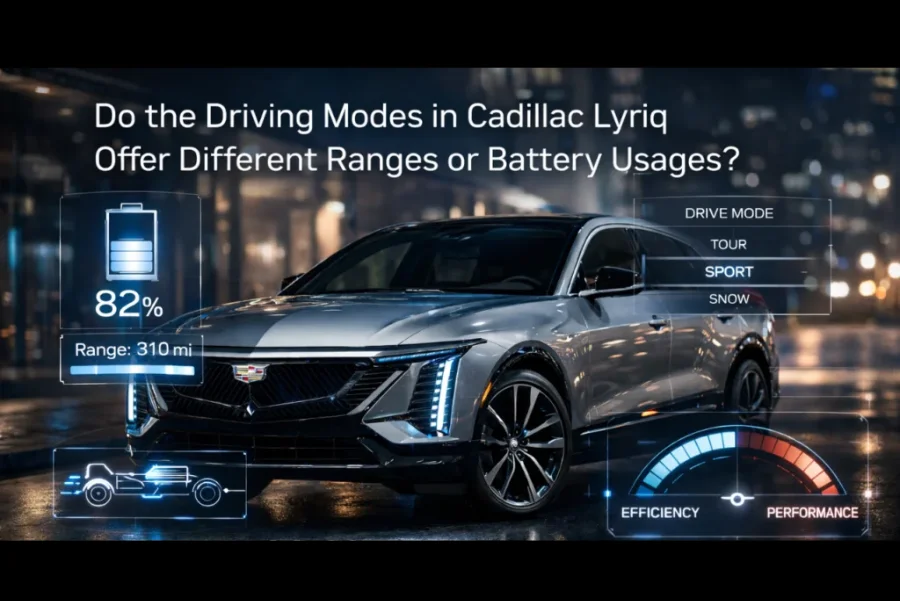
Do the driving modes in cadillac lyriq offer different ranges or battery usages?
Electric vehicles like the Cadillac LYRIQ are full of smart technology, but that can also make them a bit confusing. One question many people ask is: Do the driving modes in cadillac lyriq offer different ranges or battery usages? Instead, each mode adjusts how the car delivers and recovers energy. Some modes make the LYRIQ feel sporty, others more relaxed, and some prioritize safety. Understanding these differences can help you plan trips better, get the most out of each charge, and even make your daily drives more comfortable. In this article, we’ll break down each mode, explain how it impacts battery usage, and give practical tips for real-world driving. By the end, you’ll know which mode to choose for your route, mood, and efficiency goals.
Understanding the Cadillac LYRIQ Driving Modes
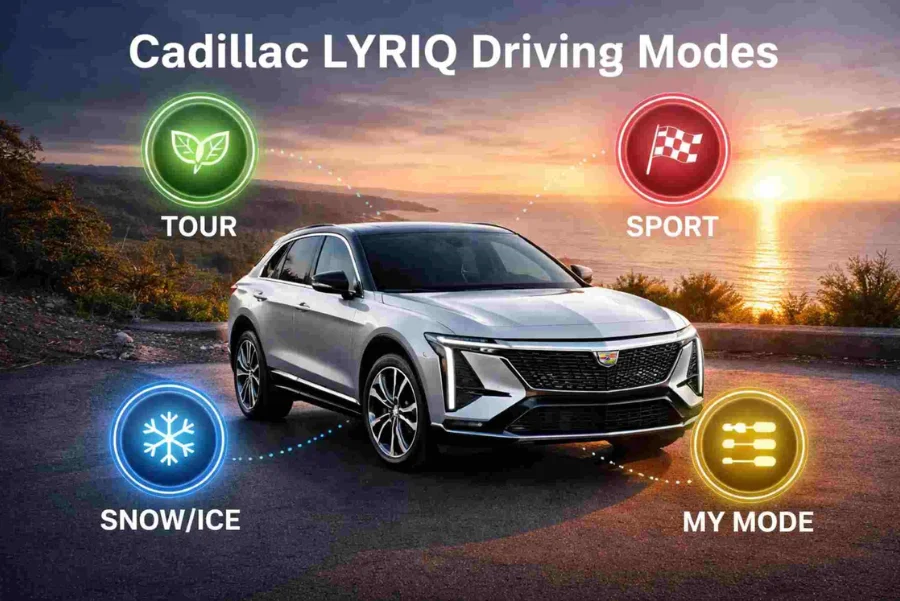
The LYRIQ comes with several driving modes, each changing how the car behaves. Think of them like personalities: one for efficiency, one for fun, one for winter, and one that lets you customize. Knowing what each mode does helps you choose the best option for your drive and battery.
Tour Mode is the default, balanced setting. It smooths out acceleration, strengthens regenerative braking, and keeps power use steady. If you’re commuting in the city or cruising on the highway, Tour mode makes your drive predictable and comfortable. You’ll notice gentle starts and stops, with energy recovery whenever you slow down.
Sport Mode sharpens throttle response, tightens steering, and delivers faster acceleration. It’s fun and responsive, but it burns more battery than Tour mode. On longer trips, this mode can noticeably reduce your range.
Snow/Ice Mode focuses on safety. It softens the throttle and manages traction to prevent slipping on slick surfaces. Range may drop slightly because winter conditions and extra heater use consume more energy.
My Mode allows you to customize throttle, steering, and regenerative braking. You can lean toward efficiency like Tour mode or performance like Sport mode. This flexibility helps you adapt to city driving, highways, or personal preferences.
One-Pedal Driving uses regenerative braking to slow the car when you lift your foot off the accelerator, converting motion into stored energy. In stop-and-go traffic, this can noticeably extend your range.
Here’s a real-life example: Picture driving through a busy city with many stoplights. In Tour mode, you’ll glide smoothly and recover energy at each stop. Switch to Sport mode, and you accelerate faster—but the battery drains quicker. My Mode lets you find a balance, and One-Pedal Driving adds extra energy recovery with minimal effort.
How Each Driving Mode Affects Range and Battery Usage
Tour Mode
Tour mode is all about balance and efficiency. It smooths acceleration and uses strong regenerative braking to recover energy when slowing down. Think of it like walking at a steady pace instead of sprinting—you reach your destination using less energy. For everyday city driving or highway cruising, this mode is ideal. It keeps your battery usage moderate and maximizes the LYRIQ’s range.
On highways, Tour mode keeps the car cruising efficiently. The LYRIQ avoids sudden power spikes, which reduces unnecessary energy consumption. In stop-and-go traffic, regenerative braking works harder to recapture energy at traffic lights or when decelerating for curves. This makes your battery last longer and your range more predictable, often getting closest to EPA estimates.
Real-world tip: Try easing on the accelerator and allowing the car to coast whenever possible. For example, when approaching a red light, lift off the pedal gently rather than braking sharply. The LYRIQ recaptures that energy, and your battery lasts longer.
Another benefit of Tour mode is comfort. Acceleration feels gentle, steering is relaxed, and the ride is smooth—perfect for daily commutes or long trips. Even if you’re unfamiliar with EVs, this mode makes driving simple and predictable.
Sport Mode
Sport mode makes the LYRIQ feel much more responsive. Throttle reaction is quicker, steering is tighter, and acceleration comes faster. It gives you a thrilling driving experience but consumes more energy. Imagine sprinting versus jogging: you get somewhere faster, but it takes more effort and energy. In Sport mode, your battery works harder because aggressive acceleration demands higher current from the battery, and regenerative braking is slightly less aggressive, so less energy is recovered.
In real-world driving, using Sport mode can reduce your range by 10–20%, depending on driving style. Frequent rapid acceleration, sharp turns, or high-speed cruising amplify energy use. This mode is great for short, spirited drives or winding roads, but for long trips, it may limit how far you can go on a single charge.
Sport mode is also ideal when you need quick responsiveness, like merging onto a busy highway or overtaking slower vehicles. However, if your goal is efficiency, Tour or My Mode with energy-focused settings is better. Even small adjustments, like easing off the accelerator during routine driving, can significantly save energy.
Snow/Ice Mode
Snow/Ice mode is designed for slippery roads. It softens throttle response, adjusts torque delivery, and engages traction control to prevent wheel slip. Because acceleration is gentler, energy use can be slightly lower. However, winter conditions often reduce range anyway. Cold batteries operate less efficiently, tires have more rolling resistance, and cabin heating draws extra power.
Here’s a practical scenario: Driving on a snowy road with Snow/Ice mode activated. You’re careful with acceleration, the car maintains traction, and energy recovery from braking is moderate. Even though you’re driving safely, your total range might be lower than on dry, warm days because heating the cabin and moving through snow consumes more energy.
The LYRIQ’s traction systems make these adjustments automatically. You may notice slower acceleration and steadier speeds, but the trade-off is safer handling in slippery conditions. Range isn’t the priority here—control and safety are.
My Mode
My Mode gives you full control over throttle, steering, and regenerative braking. You can configure it for efficiency, mimicking Tour mode, or for performance, closer to Sport mode. This flexibility is useful if your driving conditions change. For instance, you could set strong regenerative braking and gentle throttle for city commuting, then switch to more responsive settings on the highway.
Real-world example: On a mixed trip with city traffic and highway driving, you can start in energy-saving settings, then adjust for a faster feel on open roads. My Mode also allows you to customize One-Pedal Driving intensity, further enhancing energy recovery or performance.
The impact on range depends entirely on your configuration. Choosing gentler throttle and stronger regeneration can maintain or slightly improve efficiency. Choosing aggressive throttle and lighter regeneration mirrors Sport mode, which reduces range.
One-Pedal Driving and Regenerative Braking
One-Pedal Driving uses regenerative braking to slow the car when you lift off the accelerator, converting motion into stored energy. In stop-and-go traffic, this feature can noticeably extend range because frequent braking feeds energy back into the battery.
Its effectiveness depends on your driving mode. In Tour mode, One-Pedal Driving is smooth, predictable, and maximizes energy recovery. In Sport mode, it’s less aggressive to maintain performance and responsiveness. My Mode allows customization of intensity, letting you find a balance between energy recovery and driving feel.
Factors Beyond Driving Modes That Affect Range
While driving modes influence battery use, your real-world range depends on a wider set of factors. Your driving style is one of the biggest contributors. Aggressive starts, frequent rapid acceleration, and hard braking can eat through your battery quickly, even if you’re in the most efficient mode. On the other hand, smooth acceleration and gentle deceleration help conserve energy. Think of it like walking versus sprinting: covering the same distance gently uses less energy than repeatedly running short bursts.
Terrain also plays a big role. Hills and mountainous roads require more power when climbing, which can reduce your range substantially. Regenerative braking can recover some energy on descents, but climbing steep slopes still drains the battery faster. Even within the same driving mode, a hilly commute will often yield fewer miles per charge compared to a flat route.
Speed is another factor that affects consumption. Driving at higher speeds increases aerodynamic drag, which requires more energy from the battery. Even in Tour mode, cruising above 70 mph can noticeably reduce range. For example, maintaining 65 mph on the highway uses less energy than holding 75 mph consistently.
Climate conditions matter too. Batteries are sensitive to extreme temperatures. Cold weather slows chemical reactions inside the battery, while hot weather can strain cooling systems. Using the heater or air conditioning also draws power. For instance, a driver commuting in Tour mode on flat city streets may hit the car’s full estimated range. Drive the same route aggressively, on hilly roads, or in sub-zero temperatures, and you’ll notice a significant drop—even though the driving mode hasn’t changed.
Tips for Maximizing Battery Efficiency and Range
Getting the most out of your LYRIQ isn’t just about picking the right mode—it’s about good habits, preparation, and vehicle care. Smart charging practices are essential for both efficiency and long-term battery health. Daily charging should generally stop around 80%, and only occasionally reach 100% for long trips. Avoid letting the battery drain completely, as deep discharges can stress the cells over time.
Preconditioning the battery is another easy way to save energy. Most LYRIQs let you warm or cool the battery while still plugged in. This is especially useful in cold mornings or hot afternoons. By starting with the battery at the ideal temperature, the car uses less energy during the drive, giving you more miles right away. For example, preconditioning on a chilly winter morning can add several miles of range before you even start driving.
Vehicle maintenance also affects efficiency. Tires at the correct pressure reduce rolling resistance, while worn brakes or suspension components can create drag that uses more energy. Regular checks keep the car operating optimally. Even small things, like keeping tires inflated, can noticeably improve battery efficiency over time.
Finally, combine your driving mode with regenerative techniques for the best results. Tour or My Mode paired with strong regenerative braking and One-Pedal Driving is perfect for city traffic, where frequent stopping can otherwise waste energy. On highways, smooth acceleration and steady speeds help preserve range. Small, consistent adjustments—like easing off the accelerator and allowing regeneration to do its work—add up over every trip.
Switching Modes Mid-Drive: Does It Make a Difference?
You might wonder whether changing driving modes while on the move can save energy. The answer is yes, but the effect is subtle. Switching from Sport to Tour mode instantly adjusts the car’s throttle response, regenerative braking, and power delivery. The car begins using energy more efficiently right away, and you may notice your battery drain slows. However, it doesn’t increase the total capacity of the battery—the car can’t “magically” gain more miles.
Mode switching works best when combined with thoughtful driving. For example, if you’re coming off a busy city section and moving onto a long highway stretch, switching from Sport to Tour can reduce energy use over that segment. Conversely, using Sport mode briefly for overtaking or merging provides quick acceleration without a major overall impact on range. The key is to anticipate your driving conditions and select modes strategically, rather than switching frequently for small changes.
Even with mid-drive adjustments, steady driving habits usually have a larger impact than the mode itself. Smooth acceleration, gentle braking, maintaining moderate speeds, and taking advantage of regenerative braking will always preserve more energy than constant mode switching. Think of the modes as tools: they fine-tune efficiency, but your driving choices ultimately determine how far you go on a single charge.
Real-World Range vs. EPA Estimates
The LYRIQ’s EPA range gives a good ballpark, but your actual mileage will probably differ. Why? EPA tests simulate steady, ideal driving conditions—flat roads, moderate speeds, and mild temperatures. Real life is messier. Stop-and-go traffic, hills, heavy cargo, extreme temperatures, or using the heater and air conditioning all change energy use.
For example, if your LYRIQ is rated for 300 miles, driving gently on city streets might get you close to that number. But take the same car on a hilly highway at high speeds with the AC blasting, and your range could drop by 10–20%. Driving style plays a huge role too—frequent hard accelerations in Sport mode can drain battery faster than the mode itself would suggest.
Another tip: load matters. Carrying extra weight—like passengers, luggage, or cargo—forces the motor to work harder. Even moderate hills can noticeably reduce your range compared to flat city roads. Think of it like biking uphill with a backpack versus on a flat path—the energy cost goes up.
Long-Distance Driving and Trip Planning
Planning a road trip in the LYRIQ takes a little strategy, but it’s easy once you know the tricks. First, map out charging stations along your route. Apps like PlugShare or the Cadillac navigation system show fast-charging points so you won’t be left guessing.
Next, think about your driving modes. Tour mode is your friend for long highway stretches—it keeps power steady and maximizes range. Use Sport mode only for brief overtaking or fun spurts; it consumes more energy. One-Pedal Driving can help in city or suburban legs of the trip, giving extra energy back while braking frequently.
Also, consider preconditioning your battery before departure. Warming it in cold weather or cooling it in hot weather while still plugged in reduces energy use on the road. Even small stops to let the battery cool or heat slightly while charging can improve efficiency for the next leg.
Practical example: if you’re driving 250 miles, start in Tour mode to reach the first charging station efficiently. Switch briefly to Sport to pass slower traffic, then back to Tour or My Mode to cruise the rest of the way. Using regenerative braking and maintaining moderate speeds adds miles without extra charging stops.
Combining Driving Modes for Optimal Efficiency
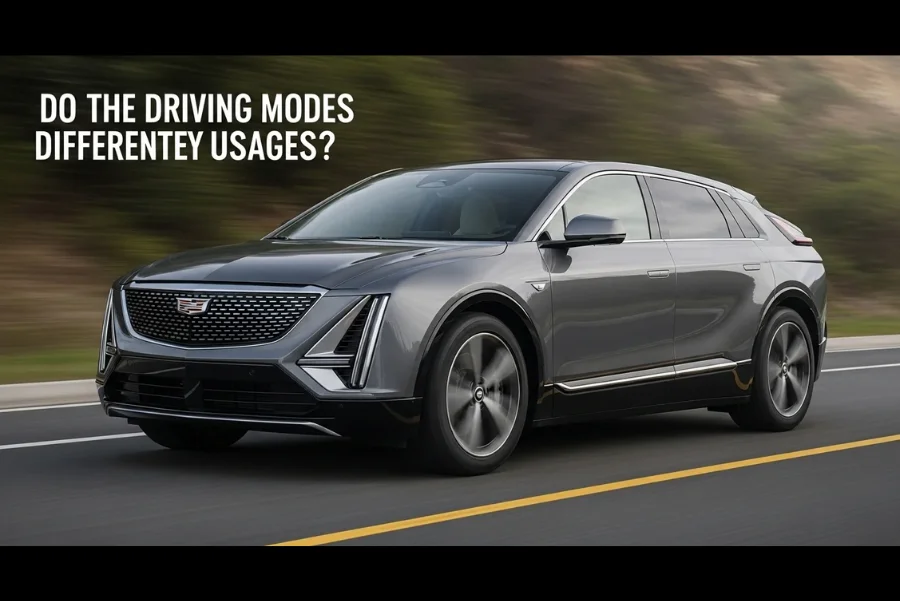
One of the LYRIQ’s strengths is flexibility. You don’t have to stick to one mode all the time—mix them depending on conditions and your comfort. Tour mode is ideal for daily city commutes and conserving energy. Sport mode works well for open roads or highway overtakes. My Mode lets you balance performance and efficiency depending on the moment.
Here’s how it works in practice: on a multi-part trip, you could start in Tour mode through city traffic, switch to My Mode with slightly sportier throttle for winding suburban roads, and then settle into Tour mode on the highway to maintain steady energy use. One-Pedal Driving can be enabled selectively for city driving to get energy back with every stop.
Another tip is to anticipate the road. Before hills or traffic lights, adjust your mode to recover energy efficiently. Combine smooth acceleration, steady cruising, and regenerative braking for maximum mileage. Over time, this habit helps you get the most out of each charge without constantly thinking about the battery.
Final Words
Electric vehicles like the Cadillac LYRIQ are packed with smart tech, and its driving modes can change how the car uses energy. Each mode—Tour, Sport, Snow/Ice, My Mode, and One-Pedal Driving—adjusts throttle, steering, and regenerative braking, affecting range and driving feel. Tour mode is smooth and efficient, perfect for daily commutes and highway cruising. Sport mode sharpens acceleration and handling but drains the battery faster. Snow/Ice mode prioritizes traction and safety in slippery conditions, while My Mode lets you customize performance and efficiency. One-Pedal Driving recovers energy every time you lift off the accelerator, especially helpful in city traffic.
Beyond modes, real-world range depends on speed, terrain, temperature, load, and driving style. Smart habits—like gentle acceleration, preconditioning the battery, proper tire pressure, and combining regenerative braking with efficient modes—can noticeably extend your range. Planning trips with charging stops and mode strategies ensures smoother drives. Understanding these features lets you enjoy the LYRIQ while making the most of every charge.
Ready for your next adventure? Join us at FunRide Adventures and make every ride unforgettable!