Key Insights from Green Bay Packers vs Philadelphia Eagles Match Player Stats
Green Bay Packers vs Philadelphia Eagles Match Player Stats: On paper, it was just a 10–7 game. But if you actually watched the Green Bay Packers vs Philadelphia Eagles matchup, you know it felt like much more than that. Every snap carried weight. Every third down felt tense. It wasn’t flashy. It wasn’t high-scoring. It was tight, physical, and strategic from start to finish.
When you look at the green bay packers vs philadelphia eagles match player stats, you start to see what really happened. This game wasn’t decided by one superstar going off for 400 yards. It was decided by small details. Red-zone execution. Third-down stops. Smart quarterback decisions. One critical fourth-down stand.
That’s what makes games like this interesting. The scoreboard tells you who won. The stats tell you how they won. In this breakdown, you’ll see exactly which players made the difference, which numbers truly mattered, and who actually controlled the game when it mattered most. By the end, you won’t just know the final score — you’ll understand who really dominated and why.
Quick Game Snapshot – Final Score and What Decided It
From the opening drive, you could feel this wasn’t going to be a shootout. There were no early deep shots. No trick plays. Just steady, physical football. Both teams played like they knew one mistake could swing everything. The final score shows a narrow 10–7 win for Philadelphia. But that number hides how competitive the game really was. Yardage totals were close. Possession felt balanced. Neither side dominated statistically in a flashy way.
What decided it wasn’t who gained more yards overall. It was who handled pressure better in key situations. They stay side by side the entire race. But near the finish line, one finds a little extra push. That’s what this game looked like. In tight NFL matchups, especially late in the season, execution beats explosiveness. And that’s exactly what this game showed.
Final Score and Key Team Totals
The Eagles finished with just under 300 total yards. The Packers were slightly above 260. That gap isn’t dramatic. In fact, it’s the kind of stat line that usually leads to a one-score game. Passing numbers were modest. Rushing attempts were steady but rarely explosive. There were no 40- or 50-yard touchdowns to inflate stats. Drives required patience. Every first down felt earned.
When you look at the green bay packers vs philadelphia eagles match player stats, you notice something important: efficiency mattered more than volume. Philadelphia converted when it had to. Green Bay moved the ball but stalled at key moments. This is common in defensive games. You can gain yards between the 20s, but if you don’t finish drives, those yards don’t change the scoreboard. It’s like doing most of a school project but forgetting to turn it in. The effort doesn’t count if the result isn’t there.
Time of possession was slightly in Philadelphia’s favor, which helped keep their defense fresh late in the fourth quarter. That small edge added up.
The 3 Plays That Shifted Momentum
Close games often hinge on just a few snaps. This one was no different. The first major shift came with DeVonta Smith’s touchdown catch. It wasn’t a lucky play. It was built through disciplined route running and a well-timed throw. That score gave the Eagles belief and forced Green Bay to respond.
The second key moment was Josh Jacobs’ touchdown run. That play tied the game and injected life into the Packers’ sideline. His physical running style energized the offense and showed Green Bay wouldn’t fade quietly.
But the most decisive moment came late in the fourth quarter: the Eagles’ fourth-down stop. With the Packers needing just one yard, Philadelphia’s defense stood firm. That single play ended Green Bay’s best chance to take control. In tight NFL games, you often see 60 minutes decided by three or four seconds of execution. This matchup was a perfect example.
Why This Was a Defensive Battle
If you love offense, this game may have felt slow. But if you appreciate defense, it was impressive. Both teams controlled space well. Tackling was sharp. Receivers rarely ran free downfield. Quarterbacks had to throw into tight windows.
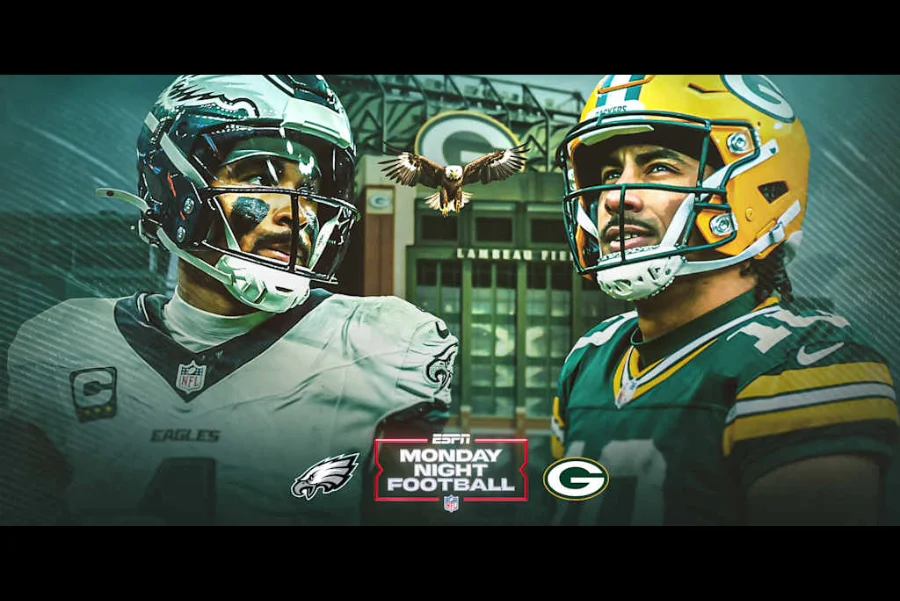
The Eagles consistently pressured Jordan Love, forcing quicker decisions and limiting deeper routes. Meanwhile, Green Bay’s defense clogged rushing lanes and made Jalen Hurts earn every completion. Explosive plays were almost nonexistent. That tells you how disciplined both secondaries were. Safeties stayed home. Cornerbacks maintained leverage. Linebackers closed quickly.
In today’s NFL, high-scoring games get more attention. But according to recent league trends, defensive pressure rate and red-zone stops remain two of the strongest predictors of winning in tight contests. This matchup reflected that reality perfectly. Every yard felt like it required effort. No freebies. No breakdowns for easy touchdowns.
Quarterback Comparison – Jalen Hurts vs Jordan Love
Quarterbacks always get the most attention. Every throw is analyzed. Every decision is questioned. But in this matchup, the story wasn’t about huge passing totals or highlight throws. It was about composure and control.
When you look at the green bay packers vs philadelphia eagles match player stats, both quarterbacks posted similar overall numbers. Neither threw multiple touchdowns. Neither threw interceptions. On paper, it looks balanced. But games like this aren’t decided on paper. They’re decided in moments.
Jalen Hurts played with steady confidence. He didn’t force risky throws. He stayed within the system. Jordan Love also showed poise, especially considering the defensive pressure he faced. But the difference came down to timing and situational success.
In tight, defensive games, quarterbacks aren’t asked to win with fireworks. They’re asked to protect the ball, convert key downs, and manage tempo. One did that slightly better than the other.
Passing Yards, Completion Rate, and Efficiency
Jalen Hurts finished 15 of 26 for 183 yards and one touchdown. That stat line won’t shock you. But it doesn’t need to. What stands out is the efficiency. He completed key throws on third down and didn’t waste possessions with careless mistakes. Jordan Love went 20 of 36 for 176 yards. Very similar yardage. No interceptions. That’s important in a 10–7 game. Protecting the football kept Green Bay in contention all night.
But here’s where efficiency becomes more than just completion percentage. Hurts’ touchdown pass came in the red zone. It turned a long drive into points. Love moved the ball between the 20s but struggled to convert drives into touchdowns.
Completion rate alone doesn’t tell the whole story. A five-yard completion on third-and-eight doesn’t help much. A six-yard completion on third-and-five keeps a drive alive. Hurts made more of those “drive-extending” throws. Think of it like two workers finishing the same amount of tasks. One finishes the most important ones first. That’s the difference in impact.
Performance Under Pressure
Pressure changes everything for a quarterback. It speeds up decisions. It shortens throws. It tests composure. Philadelphia’s defensive front consistently pressured Jordan Love. Even when he wasn’t sacked, he rarely had a perfectly clean pocket. That forces quicker reads and reduces deep-shot opportunities. You could see Love adjusting his timing throughout the night.
Hurts also faced pressure from Green Bay’s pass rush. But his mobility added another layer. When the pocket tightened, he escaped. A small scramble can turn a broken play into a positive gain. Even a short run forces defenders to hesitate on the next snap. Mobility in today’s NFL is more valuable than ever. Over the past few seasons, quarterbacks who can extend plays have consistently improved third-down success rates. It’s not about running constantly. It’s about creating options.Hurts’ ability to move kept the Eagles’ offense alive in key moments. Love relied more on timing and structure.
Red Zone Execution and Turnover Impact
In low-scoring games, red zone performance becomes the deciding factor. You can drive 70 yards perfectly, but if you leave with no touchdown, it feels empty. Neither quarterback threw an interception. That’s huge. Turnovers often decide tight games. Both Hurts and Love protected the ball well, which kept this contest close until the end.
The difference showed inside the 20-yard line. Hurts connected for a touchdown. Love’s offense couldn’t capitalize in the same way. Settling short of the end zone changed the scoreboard math completely. Red zone efficiency isn’t about flashy throws. It’s about precision and calm decision-making. Space shrinks near the goal line. Windows close faster. Defenders tighten coverage.
Hurts delivered when space was limited. Love moved the ball effectively but couldn’t finish drives the same way. In a 10–7 game, that’s everything.
Running Game Impact – Who Controlled the Ground?
When temperatures drop and defenses tighten, the running game becomes more than just another option. It becomes the foundation. That’s exactly what happened in this matchup. Neither team relied on explosive passing. Instead, both leaned on their backs to control rhythm and reduce mistakes.
If you study the green bay packers vs philadelphia eagles match player stats, you’ll notice something important: rushing attempts were steady on both sides. Coaches clearly wanted balance. They didn’t want their quarterbacks throwing 45 times into tight coverage. They wanted manageable downs and controlled tempo.
Running the ball in a defensive game works like slow pressure in a chess match. You don’t rush the attack. You build it piece by piece. Even short gains matter because they set up second-and-manageable situations instead of second-and-long.
Both teams committed to the ground game. But the subtle difference came in timing and situational success. Philadelphia’s rushing helped them sustain drives slightly longer. Green Bay’s rushing provided spark but didn’t consistently shift field position. In close games, the run game isn’t about highlight plays. It’s about control.
Saquon Barkley’s Role in Philadelphia’s Strategy
Saquon Barkley carried the ball 22 times for 60 yards. On paper, that averages under three yards per carry. That might not look impressive. But raw averages don’t tell the full story. Barkley’s role wasn’t to break off 40-yard runs. It was to keep the offense balanced and predictable in a good way. By consistently taking handoffs, he forced Green Bay’s defense to respect the run. Linebackers couldn’t fully commit to dropping into coverage. Safeties had to stay honest. That created cleaner passing lanes for Jalen Hurts.
Here’s how this works in real life. Imagine you’re trying to sell a fake move in basketball. You drive to the basket a few times early. Even if you don’t score every time, defenders start preparing for it. Later, when you pull up for a jump shot, they hesitate. Barkley’s carries had that same strategic effect. He also helped manage the clock. Short gains kept drives alive just long enough to control tempo. In a 10–7 game, those small extensions matter.
Josh Jacobs’ Production and Tough-Yard Gains
Josh Jacobs was Green Bay’s most consistent offensive weapon. He finished with 21 carries for 74 yards and a touchdown. Unlike Barkley, Jacobs generated slightly more push per carry, especially in short-yardage situations.
What stands out most is how physical his runs were. He didn’t just take what the defense gave him. He fought for extra yards after contact. That kind of effort keeps drives alive when passing isn’t working smoothly.
Without Jacobs’ touchdown run, the Packers would have struggled to stay level in the scoring battle. That play gave Green Bay momentum and energy. It showed that even in a defensive contest, persistence pays off.
Jacobs also gave Jordan Love breathing room. When your running back can pick up five tough yards, play-calling opens up. You avoid predictable third-and-long situations. That balance is critical in cold-weather games where timing in the passing game can suffer. If you remove Jacobs’ production from the stat sheet, the Packers’ offensive output drops sharply. That alone shows how central he was.
Yards Per Carry and Clock Control
Neither team posted eye-popping rushing averages. But that wasn’t the mission. The real goal was control. Philadelphia’s slight edge in time of possession reflected their ability to sustain drives just a bit longer. Even an extra minute of possession can matter in the fourth quarter. It keeps your defense fresher and limits the opponent’s opportunities.
Yards per carry in defensive games often stay modest because defensive fronts are prepared for physical play. What matters more is situational rushing. Can you gain three yards on third-and-two? Can you push forward on first down to avoid second-and-long?
Philadelphia answered those questions slightly better overall. Green Bay had strong moments, especially with Jacobs, but couldn’t consistently string together long, clock-eating drives late. Think of clock control like managing your phone battery during a long day. You don’t waste energy early. You conserve it so you’re strong at the end. Philadelphia managed that balance effectively.
Receiving Leaders – Who Made the Game-Changing Plays?
In a game where points were hard to find, receivers didn’t get many chances to shine. That’s what makes their impact even more important. When defenses dominate, every target carries weight. You might only get four or five real opportunities to swing momentum. If you miss them, the game slips away.
The green bay packers vs philadelphia eagles match player stats show that neither team had a 100-yard receiver. That tells you how tight coverage was all night. Defensive backs stayed close. Safeties limited deep routes. Linebackers helped underneath. So when a receiver made a key catch, it truly mattered.
This wasn’t about piling up yards. It was about timing, awareness, and execution on critical downs. In games like this, one clean route or one missed tackle can decide everything. Philadelphia found that moment. Green Bay couldn’t quite create it.
DeVonta Smith’s Key Conversions
DeVonta Smith finished with four catches for 69 yards and a touchdown. Those numbers may not jump off the page, but context makes them powerful. His touchdown came during a composed drive that required precision. The route was sharp. The timing was exact. The finish was clean.
Smith’s biggest contribution wasn’t just the score. It was his ability to create separation on third downs. In tight games, third-and-medium situations define drives. A receiver who can win one-on-one coverage in those moments becomes invaluable. Route running is often overlooked because it’s subtle. A small shift of the hips. A sudden change of pace. That’s what creates half a step of space. And half a step is enough in the NFL.
Here’s how this works in real life. Imagine trying to squeeze through a closing elevator door. You don’t need wide-open space. You just need a small gap at the right moment. Smith consistently found that gap.
Packers’ Top Targets and Missed Opportunities
Christian Watson and Dontayvion Wicks led Green Bay’s receiving effort, but their production stayed modest. They made solid catches and ran disciplined routes. The issue wasn’t effort. It was opportunity. Philadelphia’s secondary limited deep shots. Watson, known for his speed, rarely found open space beyond the coverage shell. That forced Jordan Love to check down more often. Short completions kept drives alive temporarily but didn’t flip field position.
In defensive games, one explosive play can change everything. A 35-yard gain shifts momentum. It energizes the sideline. It forces defensive adjustments. Green Bay never fully generated that kind of breakthrough. It’s not that the receivers failed. It’s that the margin for big plays was extremely narrow. Against disciplined coverage, even slight miscommunication or hesitation closes the window.
Explosive Plays vs Short Gains

Explosive plays were rare on both sides. Most completions stayed under 15 yards. That tells you how structured both defenses were. Safeties stayed deep. Corners trusted technique. Defensive coordinators refused to give up big chunks. Short gains require long drives. Long drives increase the chance of mistakes. A holding call. A missed block. A dropped pass. The longer the field, the harder the finish.
Philadelphia’s offense handled those long drives slightly better. They accepted small gains and trusted their process. Green Bay moved the ball but struggled to string together enough clean plays in a row. Think of it like climbing a staircase instead of taking an elevator. Explosive plays are elevators. Without them, you must climb step by step. That’s tiring and risky.
Defensive Player Stats – The Real Difference Maker
If you’re looking for the true MVP of this matchup, start with the defense. Both teams played strong defensive football, but Philadelphia’s unit made one extra impact play. The green bay packers vs philadelphia eagles match player stats show low scoring, modest yardage, and limited big gains. Those outcomes don’t happen by accident. They reflect disciplined preparation and execution.
Defense in tight games isn’t just about sacks. It’s about closing running lanes, maintaining leverage, and forcing uncomfortable throws. It’s about communication and trust. Philadelphia’s defense applied consistent pressure and tightened coverage late. Green Bay’s defense also performed well, holding the Eagles to only 10 points. But the Eagles created slightly more disruption at key moments.
Sacks, Pressures, and Quarterback Hits
Philadelphia’s pass rush disrupted rhythm throughout the night. Even when Jordan Love avoided sacks, he rarely stood comfortably in the pocket. Pressure speeds up internal clocks. It forces quarterbacks to release early or settle for shorter throws. Quarterback hits matter almost as much as sacks. They create hesitation on the next dropback. They shrink confidence in deep routes. That ripple effect showed in Love’s stat line.
Modern NFL analytics consistently highlight pressure rate as a key indicator of defensive success. Teams that collapse pockets without heavy blitzing often control tempo more effectively. Green Bay also generated pressure against Jalen Hurts, but Hurts’ mobility helped offset it. That small difference mattered.
Turnovers and Fourth-Down Stops
There weren’t many turnovers in this game, which made the few defensive swings even more important. A key fumble recovery shifted field position and created momentum for Philadelphia. But the defining defensive moment came on fourth down. Green Bay needed one yard to extend their drive late in the fourth quarter. Philadelphia’s defensive front held firm. No gap. No push. Just discipline.
Short-yardage defense tests fundamentals. Pad level. Hand placement. Timing. That stop wasn’t luck. It was preparation meeting opportunity. In a 10–7 contest, that single play carried enormous weight. Without it, the narrative could have changed completely.
Standout Defensive Performers
Philadelphia’s linebackers closed gaps quickly and limited yards after contact. Their defensive line controlled the edges and prevented outside runs from breaking free. Green Bay’s defense deserves credit as well. Holding an opponent to 10 points is rarely a losing effort. Their secondary maintained tight coverage and prevented deep completions.
But when comparing impact plays, Philadelphia’s defense created slightly more disruption. More pressure. More timely stops. That subtle edge mattered. In games where both defenses perform well, the difference often comes down to one additional stop or one quicker read.
Situational Stats That Quietly Decided the Game
In football, the final score doesn’t always tell the full story. Box scores list yards, points, and touchdowns, but the hidden stats often reveal which team truly controlled the game. Situational stats — like third-down conversions, red-zone efficiency, and field position — rarely make social media highlights, yet they are some of the most decisive numbers in low-scoring contests. In this matchup, those small, often overlooked advantages tilted slightly toward Philadelphia, and that subtle edge became the difference in a tight 10–7 game.
These stats show how well a team manages critical moments. Third downs indicate whether an offense can sustain drives. Red-zone efficiency measures whether a team can turn opportunities into points. Time of possession and field position reveal how much control a team has over the pace of the game. In combination, these numbers paint a picture of discipline, execution, and smart decision-making. While Green Bay moved the ball effectively at times, Philadelphia’s superior situational performance allowed them to maximize limited opportunities and quietly dictate the flow of the game.
Third-Down Conversion Rates
Third-down conversions are one of the most important hidden stats in football. They determine whether a drive continues or dies, and in close games, every third-down play is magnified. Philadelphia converted key third downs, particularly manageable ones, which allowed them to keep drives alive and avoid quick punts. Sustaining drives also gave their defense extra rest, ensuring they stayed fresh in the fourth quarter when every play mattered most.
Green Bay, on the other hand, struggled on longer third downs. When they faced third-and-eight or more, defensive coverage tightened, and pressure from Philadelphia’s front seven disrupted timing. That forced check-downs and limited big plays. Third downs act like checkpoints: convert, and your team maintains momentum; fail, and the opposing team gains control.
Philadelphia’s efficient third-down execution extended drives and subtly controlled the game’s rhythm. While the plays themselves might not look flashy, their cumulative effect set the stage for the Eagles to take the lead late and maintain it.
Red Zone Efficiency

Once teams enter the red zone, space becomes tight, and defensive attention intensifies. Passing lanes shrink, running lanes disappear, and precision becomes essential. Philadelphia converted a red-zone opportunity into a touchdown, while Green Bay failed to match that efficiency. In a low-scoring 10–7 game, this difference directly determined the winner.
Red-zone success isn’t about speed or strength alone; it requires calm decision-making, accurate execution, and trust between the quarterback and receivers. Jalen Hurts exemplified that composure, completing the critical pass when it mattered most. Green Bay had opportunities but couldn’t capitalize with the same level of precision, settling for fewer points and allowing Philadelphia to maintain a narrow advantage.
This stat illustrates the power of converting limited opportunities into points. Even if an offense moves the ball effectively, failing to finish drives in the red zone can negate all previous gains. In tightly contested games, the team that executes efficiently near the goal line often comes out on top.
Time of Possession and Field Position
Time of possession and field position are subtle but critical. Philadelphia held the ball slightly longer than Green Bay, giving their defense extra rest and reducing the number of opportunities for the Packers to score. Each possession is a chance to control momentum, and by keeping the ball longer, the Eagles effectively dictated the pace.
Field position also favored Philadelphia. After key stops, they consistently started drives closer to midfield, reducing the distance needed to score. In a defensive game, every yard counts, and starting closer to the end zone increases scoring probability while minimizing risk.
These small situational advantages accumulate over the course of the game. Even minor edges in field position or possession time can tilt momentum in a tight matchup, as they affect play-calling, energy levels, and defensive readiness. Philadelphia’s slightly better execution in these areas reinforced their ability to manage the game and secure the win.
Weather, Coaching, and Game Strategy
Strategy and execution are always intertwined with conditions. Cold, windy weather impacted how both teams approached the game, shaping play-calling and coaching decisions. Teams that adapt effectively often gain hidden advantages, especially in close, defensive contests.
How Cold Weather Affected Play Calling
Freezing temperatures influence both passing and kicking. Deep throws become riskier due to ball trajectory and grip issues, while kicking accuracy can drop drastically. Both teams responded by emphasizing shorter passes, controlled routes, and increased rushing attempts. These adjustments weren’t just about comfort — they were strategic moves to reduce turnovers and maintain possession.
This focus explains the scarcity of explosive plays and highlights the importance of precision over volume. Coaches understood that weather could decide the outcome, and they planned accordingly, balancing risk and reward effectively.
Coaching Adjustments in the Second Half
Halftime adjustments can swing momentum, and Philadelphia demonstrated that subtly. They tightened defensive coverage, focused on gap discipline, and reinforced key tendencies observed in the first half. Green Bay tried to increase tempo to counter, but their changes didn’t fully offset the Eagles’ disciplined approach.
Effective adjustments reflect situational awareness. Coaches must recognize what worked, what didn’t, and modify strategies quickly. In this game, Philadelphia’s tweaks created a slight but meaningful edge in controlling drives and slowing down Green Bay’s offense.
Risk Management vs Aggression
Neither team took reckless risks. Decision-making favored calculated aggression rather than bold gambles. Controlled aggression often wins more than high-risk plays, especially in defensive battles.
Philadelphia balanced caution and confidence slightly better. They knew when to run, when to pass, and when to trust the defense. That discipline limited mistakes and allowed them to capitalize on opportunities.
Final words
On paper, it was just a 10–7 game, but every snap felt crucial. The Green Bay Packers vs Philadelphia Eagles matchup wasn’t about big plays or flashy stats. It was about execution, discipline, and small advantages adding up. Philadelphia’s edge came from handling key moments better — converting critical third downs, finishing drives in the red zone, and controlling the clock. Jalen Hurts delivered when it mattered, Saquon Barkley’s steady carries opened passing lanes, and DeVonta Smith made the catches that sustained drives. Green Bay had moments — Josh Jacobs’ tough runs, some clean completions — but couldn’t capitalize on limited opportunities. Weather, coaching adjustments, and strategic discipline amplified every small detail. In games like this, the team that manages the invisible stats — situational execution, field position, and timing — usually wins. For the Eagles, that careful control was enough.
Ready for your next adventure? Join us at FunRide Adventures and make every ride unforgettable!