Unbanned g+: 5 Powerful Steps to Recover Your Account Safely
You may have seen the term “Unbanned G+” online and wondered what it really means. Is Google+ back? Is it a gaming site? Or is it something else entirely? The truth is simpler than most headlines make it sound. The phrase doesn’t refer to a real platform relaunch. Instead, it reflects confusion, nostalgia, and modern digital frustrations all rolled into one search term. To understand it properly, you need context — both historical and practical. Let’s break it down clearly so you know exactly what people mean when they use this phrase today.
What Does “Unbanned G+” Really Mean?
At its core, “Unbanned G+” is not an official product, company, or relaunch. It’s a phrase people use in different ways depending on what they are looking for. Some use it when talking about restored accounts. Others use it when searching for browser-based gaming pages that work on restricted networks like schools. Because the term includes “G+,” many assume it refers to Google+, but that assumption creates confusion. Search trends often revive old brand names because they still carry recognition. According to digital marketing analysis discussed by industry outlets like Search Engine Journal, ambiguous keywords often evolve beyond their original meaning. That’s exactly what happened here. The phrase survived, but its meaning shifted. To really understand it, we need to separate fact from assumption.
Is Google+ Officially Back?
No, Google+ is not back. Google officially shut down Google+ for consumers in April 2019. The shutdown followed a data exposure issue and years of declining engagement. Major outlets, including Forbes, covered the closure at the time. Since then, there has been no announcement about reviving the platform. When people say “Unbanned G+,” they are not referring to an official return. Instead, the phrase is used informally in forums, gaming pages, or discussions about digital visibility. Think of it like an old shopping mall that closed years ago. People still talk about it because they remember it, but the doors are not reopening. The name carries memory value, not operational reality.
The Two Main Meanings Behind the Phrase
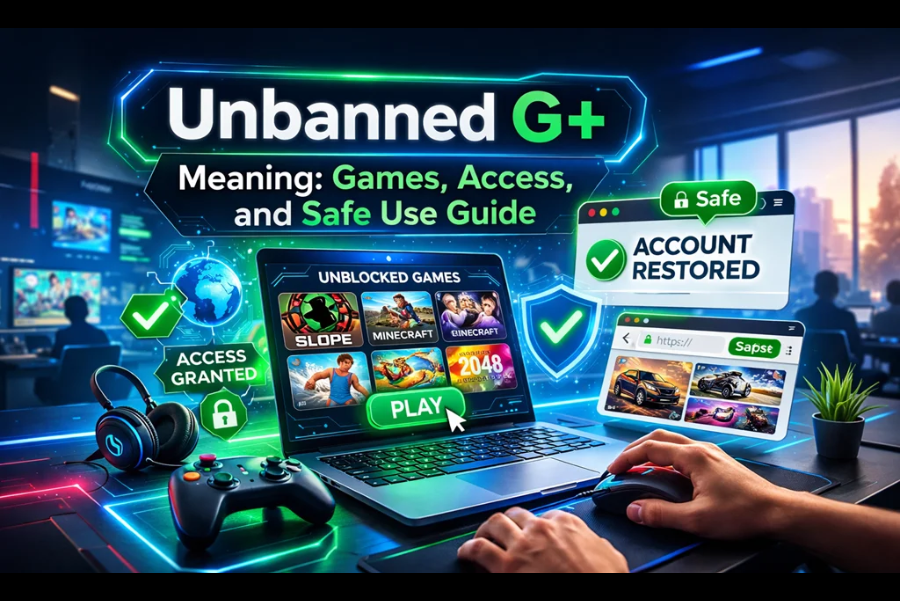
Today, “Unbanned G+” usually has two meanings. The first relates to account reinstatement. When someone says they were “unbanned,” they mean their account was restored after suspension. Over time, some online communities loosely attached the “G+” label to that idea. The second meaning is more common: browser-based unblocked gaming pages. Students often search for terms that help them access games on restricted devices. Instead of installing software, these games run directly inside a browser. Because the phrase sounds technical and slightly coded, it spread among student groups. In real life, it’s similar to finding a side entrance when the main door is locked. The goal isn’t nostalgia — it’s access. Understanding these two meanings clears up most of the confusion.
Why the Term Causes So Much Confusion
The confusion exists because the phrase blends three separate ideas: an old social network, account bans, and browser gaming. When one keyword serves multiple intentions, search results become mixed. Marketing research from HubSpot has shown that ambiguous search terms often attract different user groups with completely different goals. That’s happening here. A marketer may be thinking about SEO recovery. A student may be searching for games. A nostalgic user may think Google+ is returning. Because the phrase includes a recognizable brand reference, people assume a deeper meaning than actually exists. The result is misinformation, speculation, and recycled content. The simplest explanation is usually the correct one: the name survived, but the platform did not.
A Brief History of Google+ and Why It Shut Down
To understand why people still mention G+, you need to understand what it was. Google+ launched in 2011 as Google’s answer to Facebook and Twitter. At the time, social media was expanding quickly. Google already owned Gmail, YouTube, and Search. Adding a social layer seemed logical. The platform aimed to organize connections more thoughtfully than competitors. However, strong ideas do not always guarantee strong adoption. While the concept attracted early interest, engagement never reached Facebook levels. By 2019, after security concerns and low usage, the company decided to shut it down. The story matters because the platform introduced ideas that still influence modern communities.
How Modern Algorithms Changed Online Visibility
When Google+ first launched, most social platforms showed posts in chronological order. If someone shared something at 9:00 a.m., you saw it after the 8:59 post. It was simple. Visibility depended mostly on when you posted and who followed you. Today, that system has changed completely. Platforms now use complex ranking algorithms to decide what appears at the top of your feed. These systems evaluate engagement signals, relevance, user behavior, and content quality.
Google publicly explains through Google Developers documentation that ranking systems aim to prioritize helpful, relevant, and high-quality content. That sounds fair in theory. But in practice, it can feel unpredictable. One day your post reaches thousands of people. The next day, it barely gets noticed. Nothing changed in your effort — but something changed in the system.
This unpredictability fuels phrases like “unbanned.” When reach drops, it feels like punishment. When it returns, it feels like restoration.
The Difference Between Being Banned and Losing Reach
It’s easy to confuse a visibility drop with a ban, but they are very different situations. A ban usually involves a clear action taken against your account. You might receive a policy violation notice, lose access to features, or be temporarily suspended from logging in. It’s direct and obvious.
A reach decline, however, is quieter. Your account works normally. You can post. You can comment. But your impressions fall. Engagement decreases. Fewer people see your content. According to educational guidance from Google Developers, ranking fluctuations often result from algorithm updates, changes in competition, or shifts in content quality signals — not from punishment.
Emotionally, though, both experiences feel similar. Imagine running a store where customers suddenly stop coming in. You might assume you were banned from the street. In reality, traffic patterns simply changed. Understanding this distinction prevents unnecessary panic and misinformation.
How the “Unbanned G+” Term Spread Through Gaming Communities
The phrase “Unbanned G+” gained a second life inside gaming communities, especially among students using restricted school networks. Many schools block traditional gaming websites to reduce distractions. Students, however, are creative. They share alternative links privately. They rename pages. They use indirect labels.
Over time, “Unbanned G+” became shorthand for browser-based game hubs that worked despite network filters. These pages usually rely on simple web technologies that run directly inside a browser without downloads. Because the phrase didn’t clearly say “games,” it sounded harmless and technical. That subtlety helped it spread.
Importantly, this version of the term has nothing to do with Google+. It’s digital slang. Language evolves quickly online, especially in closed communities. Words detach from their original meaning and take on new uses.
What Google+ Was Designed to Do
When Google launched Google+ in 2011, the goal wasn’t just to copy Facebook. It was to fix what many people disliked about social media at the time. One major issue was oversharing. On most platforms, you posted something and everyone saw it — coworkers, family, acquaintances, all mixed together. Google+ tried to solve that with a feature called “Circles.” You could group people based on how you knew them and choose exactly who would see each post. In real life, you speak differently to your boss than to your childhood friend. Google+ wanted your online world to reflect that reality.
The platform also aimed to make conversations more thoughtful. Instead of chasing viral posts, it encouraged interest-based discussion. The design felt organized and intentional. It was built around the idea that social media could be structured, not chaotic.
Why Users Are Still Looking to Access G+ Accounts in 2026
Even though Google+ shut down years ago, the phrase “Unbanned G+” continues to show up in search data. Why? Because search behavior doesn’t disappear just because a platform does. People remember names. They reuse them. They reinterpret them.
Sometimes users are searching from memory. They vaguely remember Google+ Communities and wonder if something similar exists. Other times, they are searching for unblocked game hubs and use the phrase because they’ve seen it shared in online forums. In SEO terms, this is called legacy brand search — when an old brand name keeps generating traffic long after the product is gone.
Industry discussions on sites like Search Engine Journal often highlight how nostalgic keywords continue driving search volume years after closure. That’s exactly what’s happening here. The phrase survives because it blends nostalgia, curiosity, and utility.
The Psychological Appeal Behind the Word “Unbanned”
The word “unbanned” is powerful. It suggests freedom. Restoration. Second chances. When someone feels banned online — whether it’s a suspended account or a drop in visibility — it feels personal. Even if it’s algorithmic, it feels emotional. That’s why the phrase “unbanned” carries weight.
In today’s digital environment, creators often talk about shadow bans, suppressed reach, or declining impressions. According to reporting and analysis from Forbes, many creators struggle to understand algorithm shifts that impact exposure. When visibility drops without clear explanation, users interpret it as punishment.
What This Teaches Us About Digital Trends
The evolution of “Unbanned G+” reveals something bigger about how the internet works. Online language moves fast. A brand name can outlive the platform itself. A phrase can shift meaning based on community use. Even after Google+ closed, the name continued circulating because it carried recognition.
For marketers, this highlights the importance of understanding search intent. Not every keyword means what it once did. For everyday users, it shows how digital culture adapts. People reuse familiar terms to describe new needs — whether that’s gaming access, account recovery, or restored visibility.
Trends are rarely just about products. They’re about emotions. Nostalgia for community platforms. Frustration with algorithms. Desire for fairness and access. “Unbanned G+” survives because it connects to those feelings.
Key Features
Google+ stood out because of its features. “Circles” gave you control over your audience. “Communities” allowed users to join topic-focused groups, whether that was photography, coding, fitness, or travel. Conversations inside these groups often felt deeper and more organized than fast-moving feeds on other platforms. Then there was “Hangouts,” which allowed video calls years before remote meetings became normal. Long before Zoom became common, Hangouts made online video interaction accessible.
Google+ also connected tightly with Gmail and YouTube. In theory, this integration made everything smoother. Your Google account worked across services. But in practice, some users felt pushed into using Google+ because it was tied to other tools. That friction slowed adoption.
From a product perspective, these features were innovative. Even today, digital marketing experts writing for platforms like Search Engine Journal often discuss audience segmentation and community building — ideas Google+ promoted early on.
The Reasons It Was Discontinued in 2019
Despite its strong ideas, Google+ struggled with user engagement. Most people already had established networks on Facebook and Twitter. Convincing millions to move platforms proved difficult. Many users created accounts but rarely returned. Low daily activity is dangerous for a social network because conversations depend on consistent participation.
In 2018, things became more serious. Google revealed a data exposure issue that affected hundreds of thousands of accounts. Coverage from outlets like Forbes amplified public concern. Trust is critical for social platforms. Once users feel their data isn’t secure, confidence drops quickly.
Maintaining a global social network also requires significant investment. If engagement doesn’t justify the cost, companies reconsider priorities. By April 2019, Google officially shut down the consumer version of Google+.
The Lasting Impact of Google+ on Online Communities
Even though Google+ shut down, its influence didn’t disappear. Many of its ideas quietly shaped how modern communities operate. Topic-based groups, audience segmentation, and structured discussion formats are now common features across platforms. The idea that not every post should be public to everyone has become widely accepted.
Today, smaller community-driven platforms emphasize focused conversations over viral trends. Industry discussions on sites like Search Engine Journal frequently highlight the importance of niche audiences and engagement quality — principles Google+ supported early on.
In real life, people prefer smaller gatherings where conversation feels meaningful. Google+ understood that instinct. It may not have won the social media race, but it introduced ideas that still shape digital design today.
Final Words
“Unbanned G+” is not a product you can download. It is not an official relaunch. It is a phrase shaped by nostalgia, gaming searches, and digital visibility concerns. Some people use it when looking for browser-based game pages. Others use it when talking about restored accounts or recovered reach after algorithm drops.
What makes the phrase interesting is not the platform itself, but what it represents. It reflects a desire for control, fairness, and transparency online. Users want to feel visible. They want to understand moderation rules. They want communities that feel focused rather than chaotic.
Google+ is not returning. But the ideas behind it — structured sharing, topic-based discussion, controlled visibility — are still relevant. That’s why the name continues to appear in searches. The platform may be gone, but the conversation it started about better digital spaces is still alive.
Ready for your next adventure? Join us at FunRide Adventures and make every ride unforgettable!